
The First 15 Minutes at a Conference Venue: What a Photographer Is Looking For
The most important work at a conference happens before the first speaker walks on stage. For a photographer, the first 15 minutes inside the venue will shape every key shot for the rest of the day.
This is what we are looking at when we arrive.
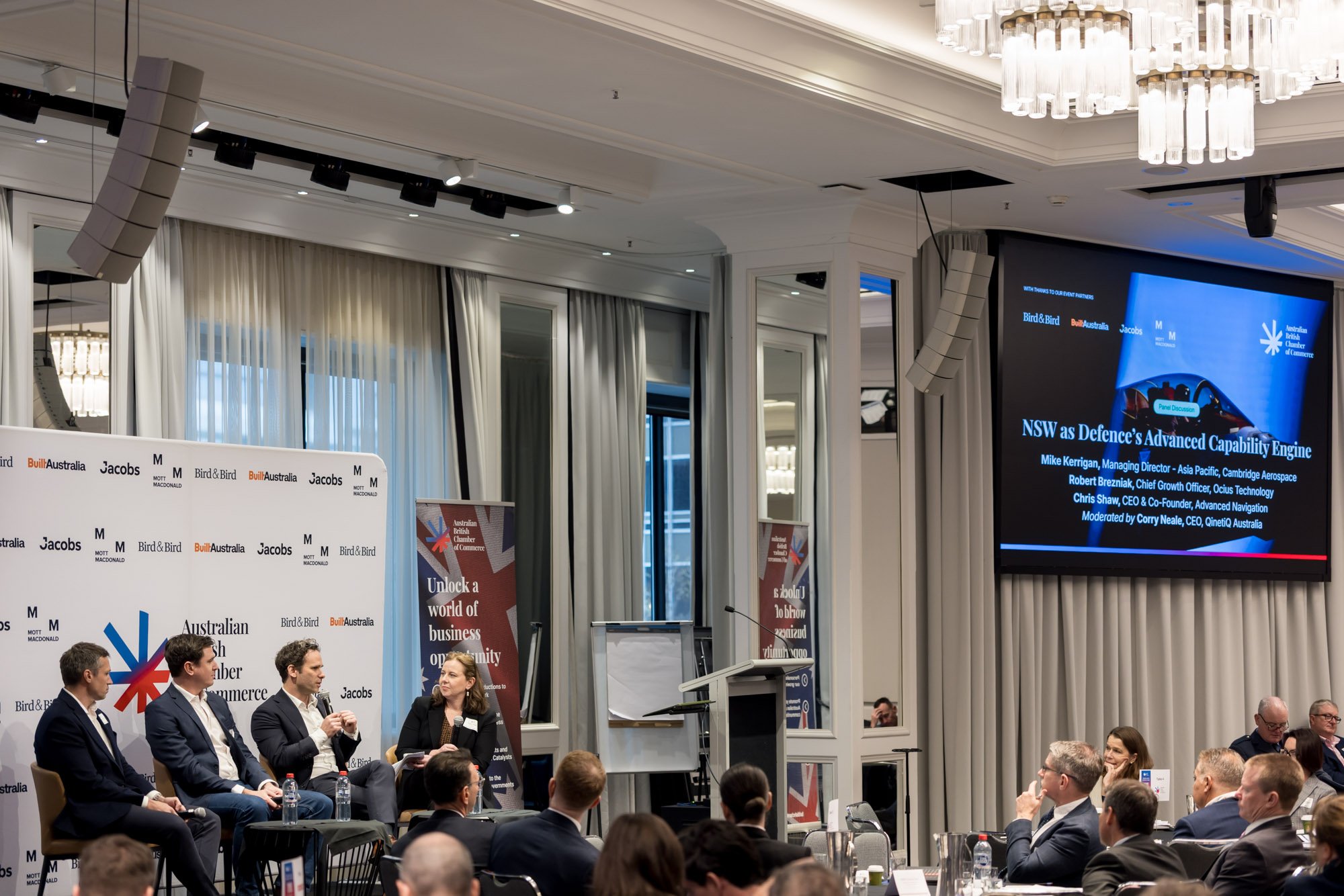
How the stage is lit
Stage lighting is the single biggest factor in whether the keynote and panel shots come out well or not. The first thing we check is whether the speakers are going to be evenly lit.
At a lot of corporate conferences the AV team will light the lectern beautifully and leave the panel seating in shadow. That works fine for the keynote but the moment you have four panellists sitting across a stage, you have one person lit properly and three that are underexposed or washed out by the contrast.
If the panel seating is not lit as well as the lectern, that is worth raising with the AV team before the first session. An extra wash of light across the panel chairs can fix the problem in two minutes. Once the session starts, there is nothing the photographer can do about it.
We also check for hot spots. A single overhead spotlight pointed directly down on the lectern will create harsh shadows under the speaker's eyes and nose. It looks fine to the audience sitting 10 metres away but in a photograph it is unflattering. A broader, softer wash of light is always better for photography and it is usually a simple adjustment for the AV team if you ask before the day begins.
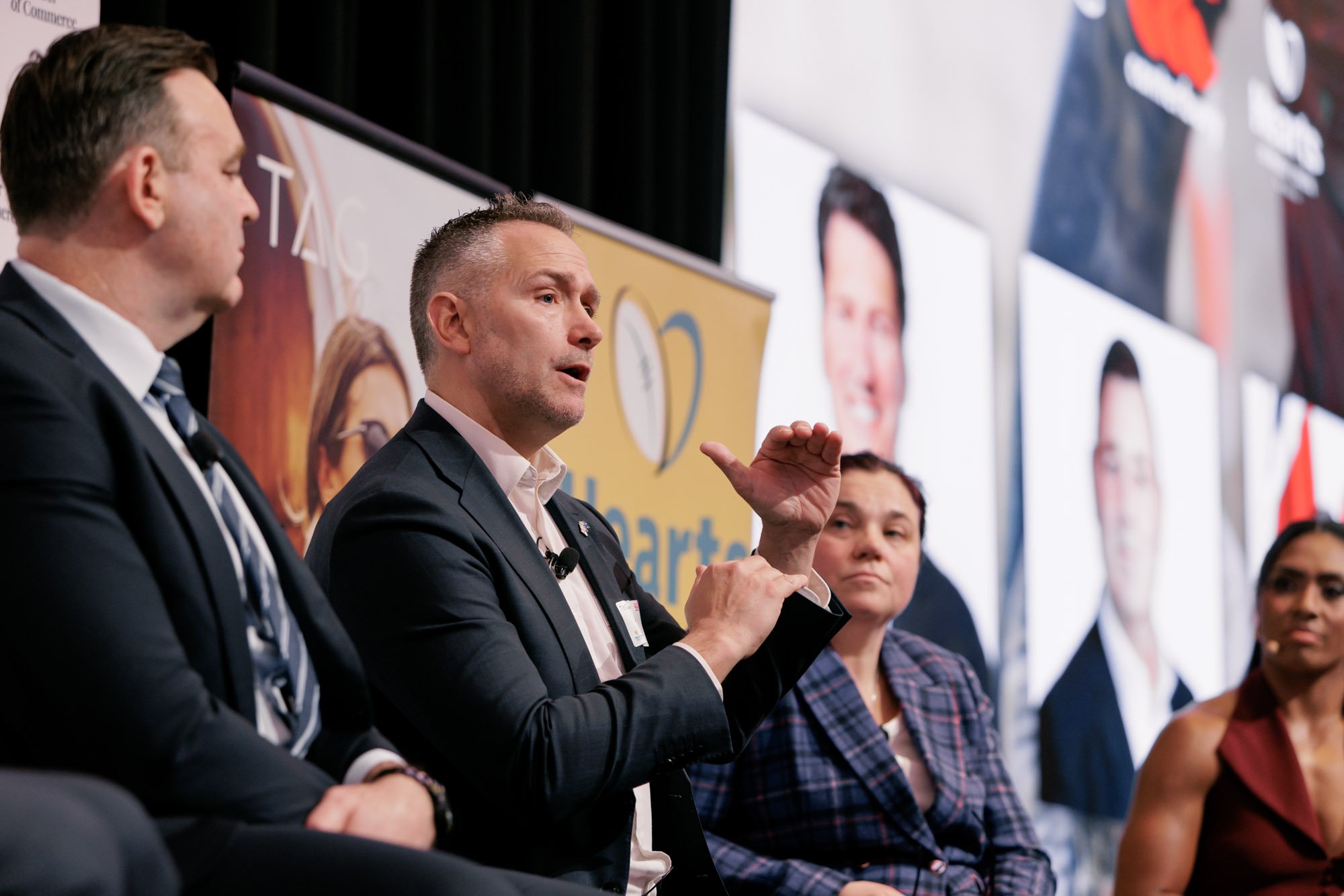
What is behind the speaker
This is the one that catches people out most often. A speaker can be perfectly lit from the front, but if there is a bright LED screen, a projector or a bank of windows directly behind them, the camera sees something very different from what the audience sees.
The human eye adjusts to backlighting automatically. A camera does not. A bright screen behind a speaker will either blow out to white or the camera will expose for the screen and the speaker's face goes dark. Either way, the shot is compromised.
There are a few things to look for. A digital LED screen directly behind the speaker is the most common issue. If the screen is showing a bright white slide or a video loop, it will overpower the speaker in every frame. A projector screen with a strong image can do the same thing. Windows behind the stage during a daytime event are another version of the same problem, especially in venues with large glass panels or harbourside aspects.
The fix depends on the situation. Sometimes the AV team can increase the front lighting to balance the screen. Sometimes the screen brightness can be reduced slightly without the audience noticing. Sometimes it is a matter of positioning, if the photographer can shoot from an angle where the screen is not directly behind the speaker's head, the problem is reduced.
The point is that these are solvable if you catch them before the event starts. Once the keynote is underway and the speaker is backlit by a white slide, the photographer is stuck.
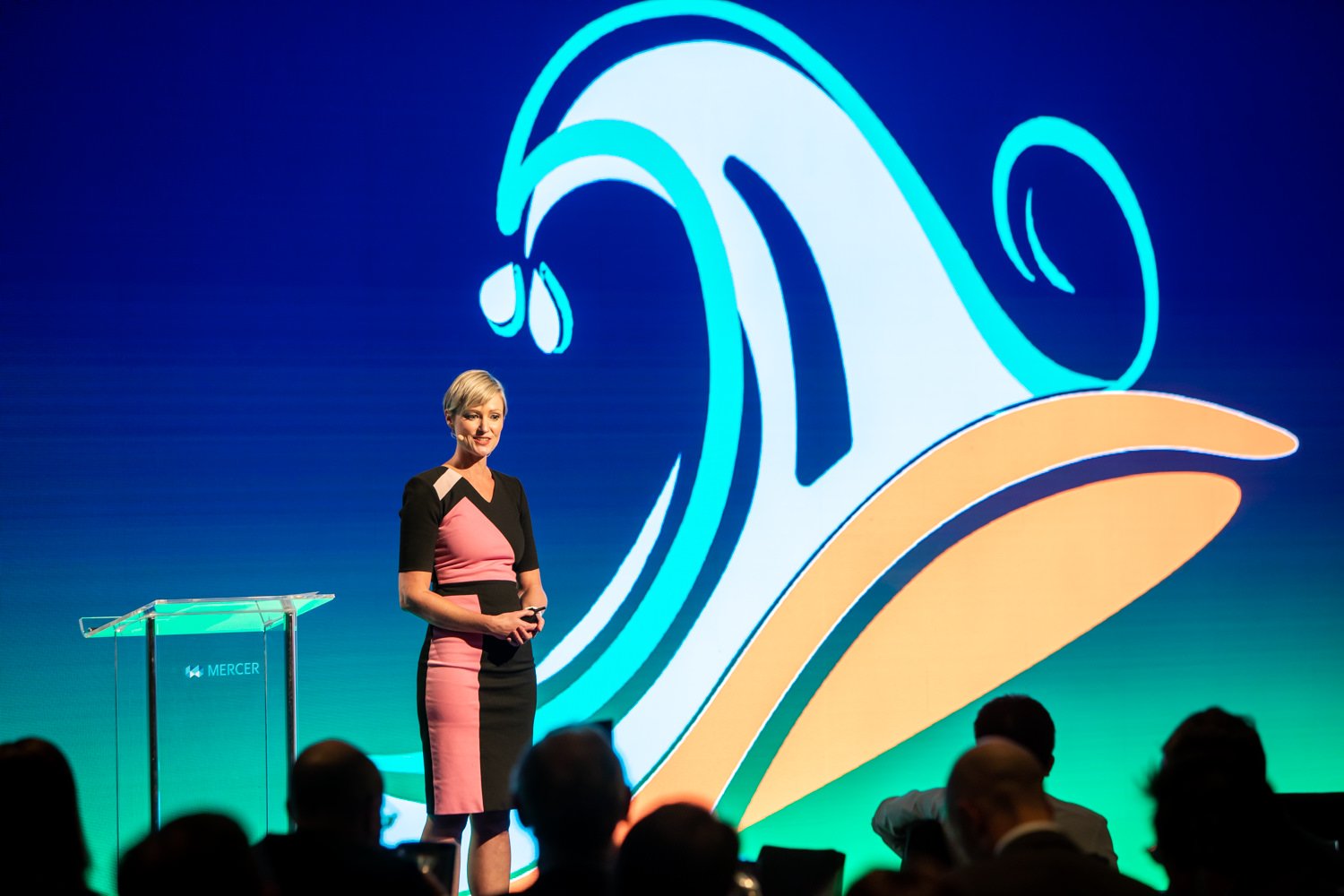
What is on the stage
Stage clutter is the kind of thing nobody thinks about until it is in every photo.
The most common issue is the lectern. A large lectern positioned centre stage works fine for a solo keynote but if the program to know in advance so they can plan their angles around it.
Then there are the smaller things. Water bottles and glasses on a table between panellists are minor on their own, but a branded water bottle with a bright label sitting directly in front of a panellist's chest will appear in every mid-shot. Loose cables trailing across the front of the stage. A monitor angled toward the audience that catches the light. Printed name cards that have fallen over. None of these are the photographer's responsibility to fix, but noticing them before the session starts means they can be tidied up or at least accounted for.
We walk the stage before the first session whenever possible. If something minor needs moving, we just move it. If it is a bigger change, we flag it with the organiser or the AV team. Either way, we are seeing the stage the way the camera is going to see it. What looks fine from the fifth row of the audience can look cluttered or distracting through a 70-200mm lens.
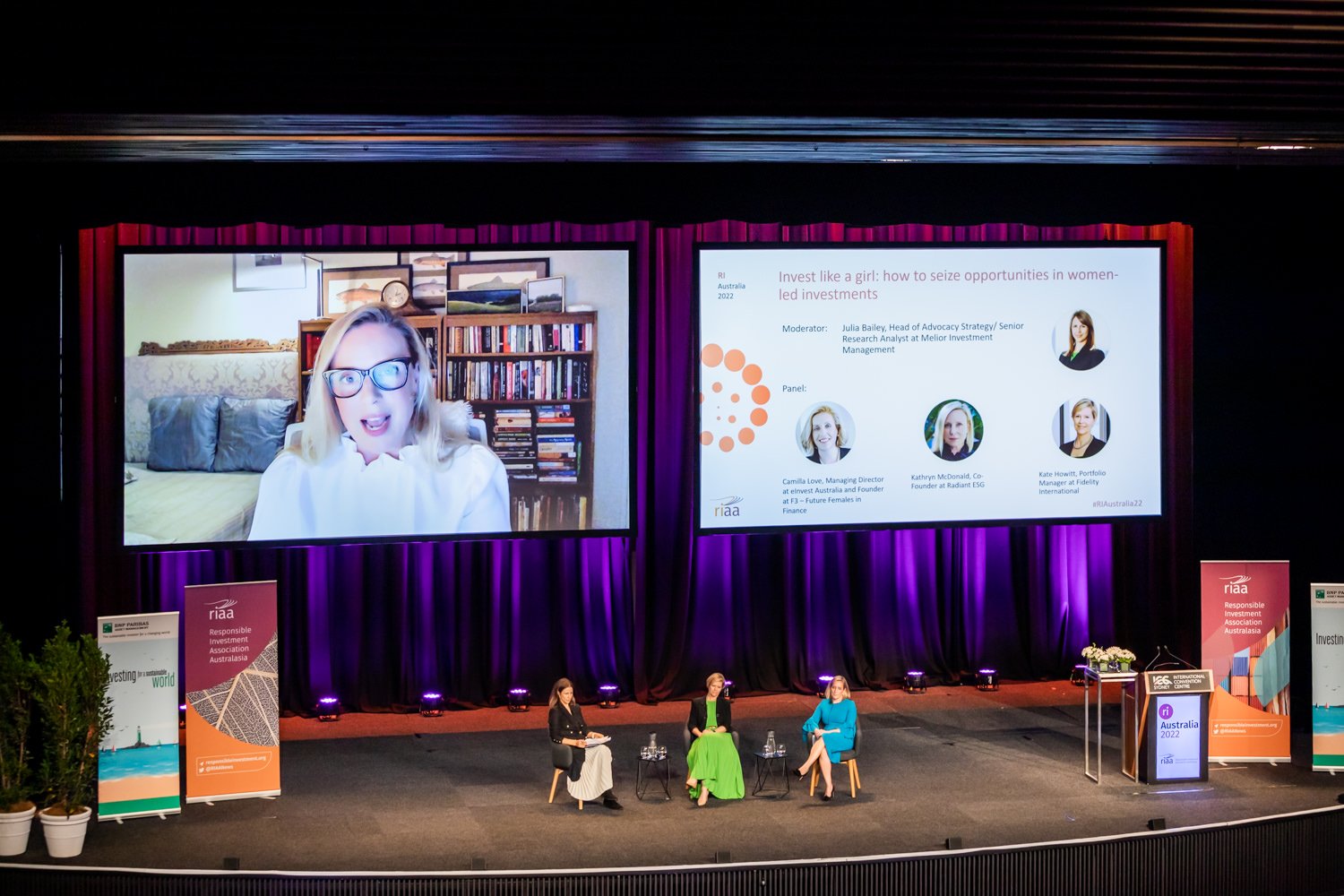
Sight lines and shooting positions
The last thing we check is where we can actually stand during the sessions. Every venue is different. Some have clear aisles down both sides of the room. Others have seating right up to the walls. Some have a media riser or a designated photography area at the back. Others have nothing.
Knowing where you can move during a session matters because the best conference photography comes from multiple angles. A photographer who is stuck in one position for an entire keynote will deliver 50 variations of the same frame. One who can move quietly between the front, the side and the back of the room will deliver a set of images that tell the full story of the session.
We identify our shooting positions before the audience arrives. Where can we stand without blocking anyone's view. Where are the exits so we can move between rooms without walking in front of the stage. Where is the sound desk, because that is usually the worst angle for photography and the place most photographers default to because it feels out of the way.

Why this matters to the person booking the photographer
Most of this is invisible to the client. That is the point. An experienced conference photographer does this work automatically and the client never has to think about it.
But if you are an event organiser or a marketing manager reading this, it is worth knowing what the photographer should be doing in those first 15 minutes. If they arrive five minutes before the first session with no time to check the stage, the lighting or the layout, every shot for the rest of the day is reactive instead of planned.
The difference between good conference photography and average conference photography is rarely about the camera. It is about what the photographer noticed before anyone else walked into the room.
We photograph conferences across Sydney and we build this kind of preparation into every booking. If you want to talk about what coverage looks like for your next event, visit our event photography page.